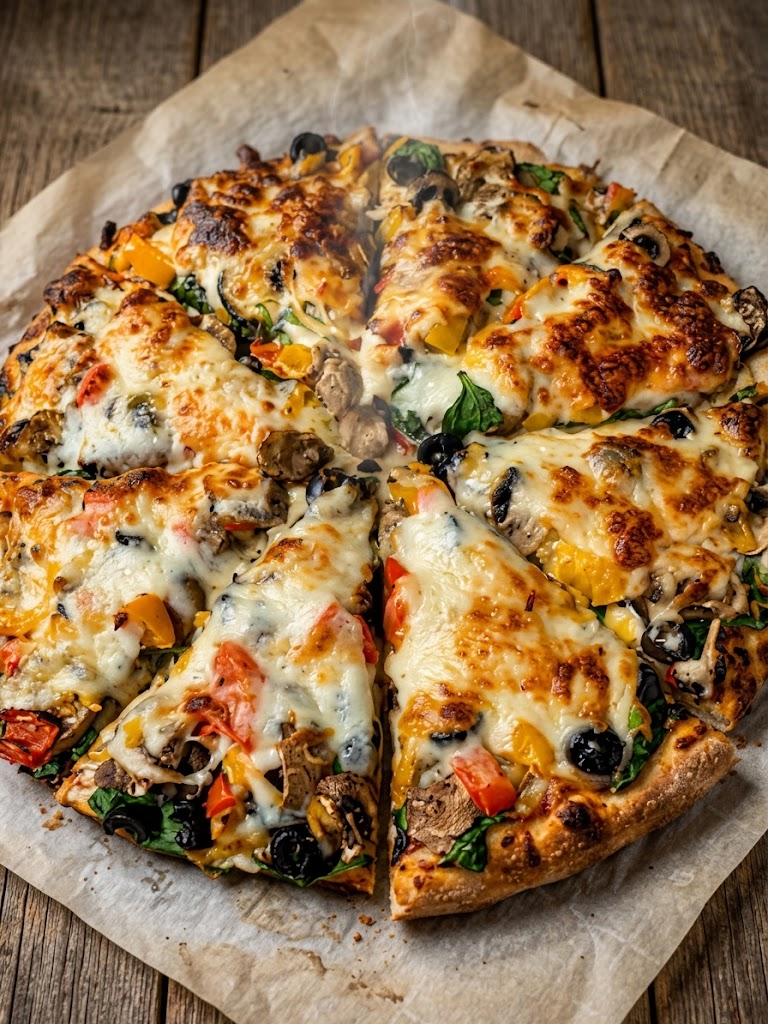

This Healthy Cauliflower Crust Pizza is a delicious way to enjoy pizza night with a vegetable-based crust that is crisp around the edges, tender in the center, and loaded with classic pizza flavor. Riced cauliflower combines with cheese, egg, and simple seasonings to create a sturdy crust that holds your favorite toppings beautifully.
Can This Healthy Cauliflower Crust Pizza Support Weight Loss Goals?
This pizza can fit into a balanced weight-conscious eating pattern when portion sizes and toppings are kept reasonable. Using cauliflower as the base adds vegetables and fiber while reducing the amount of traditional refined flour in the crust. Choosing lean protein toppings and plenty of vegetables can make the pizza more filling without relying on excessive cheese or heavy sauces.
Does This Recipe Fit a High-Protein Lifestyle?
Yes, this cauliflower pizza can fit a high-protein lifestyle, especially when topped with protein-rich ingredients. Eggs and mozzarella contribute protein to the crust, while toppings such as grilled chicken, turkey, or lean beef can increase the total substantially. The cauliflower keeps the crust relatively moderate in carbohydrates, with approximately 8g net carbs per serving before additional toppings. For the highest-protein version, use lean chicken and moderate amounts of cheese.
Why This Recipe Is Special
- Vegetable-based crust: Cauliflower replaces most of the traditional flour-based pizza base.
- Crispy edges: Properly squeezing the cauliflower creates a firmer, crispier crust.
- Cheesy and flavorful: Mozzarella and Parmesan give the crust a rich pizza flavor.
- Customizable: Add vegetables, chicken, turkey, mushrooms, or your favorite toppings.
- Family-friendly: It is an easy way to add more vegetables to pizza night.
My Personal Experience
- Squeezing the cauliflower is the key: Excess moisture is the biggest enemy of a firm cauliflower crust.I recommend squeezing the cooked cauliflower extremely well before mixing the dough.
- Baking the crust first matters: Adding toppings before the crust has firmed up can leave the center soft.Giving it a proper pre-bake creates a much stronger base for the sauce and toppings.
- A little Parmesan adds extra flavor: Parmesan gives the crust a savory, slightly nutty taste.Even a small amount makes the cauliflower flavor less noticeable.
- A hot oven creates better edges: High heat helps the crust dry and brown properly.I like letting the crust become golden before adding the toppings.
Perfect For
- Homemade pizza nights
- Lower-carb meals
- High-protein meal plans
- Family dinners
- Vegetable-forward meals
- Gluten-free pizza lovers
- Quick weekend lunches
Why You’ll Love This Recipe
- Crispy and satisfying: Properly baked cauliflower creates surprisingly sturdy pizza slices.
- Easy to customize: Use your favorite sauce, cheese, vegetables, or protein toppings.
- Naturally gluten-free: The crust contains no traditional wheat flour.
- Protein-friendly: Eggs, cheese, and lean toppings can make this a protein-rich meal.
- Great pizza flavor: Italian seasoning, garlic, mozzarella, and Parmesan make every bite savory and delicious.
Common Mistakes to Avoid
- Leaving too much moisture in the cauliflower: This creates a soft, fragile crust.
- Making the crust too thick: A thick layer takes longer to dry and can remain mushy in the center.
- Skipping the pre-bake: The crust needs time to firm up before toppings are added.
- Using too much sauce: Excess sauce can make the crust soggy.
- Adding too many toppings: A heavy topping load can prevent the crust from becoming crisp.
Required Equipment
- Food processor: Quickly turns cauliflower florets into rice-like pieces.
- Microwave-safe bowl or saucepan: For cooking the cauliflower.
- Clean kitchen towel or cheesecloth: Essential for squeezing out excess moisture.
- Baking sheet: Provides a flat surface for shaping and baking the crust.
- Parchment paper: Prevents the crust from sticking.
- Spatula: Makes spreading the crust and adding toppings easier.
Storage Instructions
Store leftover pizza in an airtight container in the refrigerator for up to 3 days. Reheat slices in an oven or air fryer at 375°F (190°C) for about 5–8 minutes to restore crispness. For longer storage, freeze baked slices individually and transfer them to a freezer-safe bag for up to 2 months. Reheat directly from frozen until hot and crisp.
Recipe Details
- Prep Time: 20 minutes
- Cook Time: 30–35 minutes
- Total Time: 50–55 minutes
- Servings: 4
- Best Season: Year-round
- Approx. Calories: 285 calories per serving
Short Description
Healthy Cauliflower Crust Pizza combines riced cauliflower, cheese, egg, and Italian seasonings to create a flavorful homemade pizza base. It bakes until golden and crisp before being topped with tomato sauce, mozzarella, and your favorite toppings. It is an easy vegetable-forward alternative to traditional pizza crust.
📝 Ingredients
For the Cauliflower Crust
- 1 large head cauliflower, about 2½–3 cups riced
- 1 large egg
- 1 cup shredded low-moisture mozzarella cheese
- ¼ cup grated Parmesan cheese
- 1 teaspoon Italian seasoning
- ½ teaspoon garlic powder
- ¼ teaspoon onion powder
- ¼ teaspoon salt
- ¼ teaspoon black pepper
For the Toppings
- ½ cup low-sugar pizza sauce or marinara sauce
- ¾ cup shredded mozzarella cheese
- ½ cup cooked diced chicken breast, optional for extra protein
- ¼ cup sliced bell peppers
- ¼ cup sliced mushrooms
- 2 tablespoons sliced black olives, optional
- 1 tablespoon chopped fresh basil
- ¼ teaspoon red pepper flakes, optional
Directions
- Preheat the oven: Set the oven to 425°F (220°C). Line a baking sheet with parchment paper.
- Rice the cauliflower: Cut the cauliflower into florets and pulse in a food processor until it resembles fine rice. Avoid processing it into a smooth puree.
- Cook the cauliflower: Place the cauliflower rice in a microwave-safe bowl and microwave uncovered for 4–5 minutes, stirring halfway through. Alternatively, steam it until tender.
- Cool slightly: Let the cooked cauliflower sit for about 5 minutes, until it is cool enough to handle.
- Remove moisture: Transfer the cauliflower to a clean kitchen towel or cheesecloth. Wrap it tightly and squeeze firmly over the sink until as much liquid as possible has been removed. This step is essential for a firm crust.
- Make the crust mixture: Place the dry cauliflower in a bowl. Add the egg, mozzarella, Parmesan, Italian seasoning, garlic powder, onion powder, salt, and black pepper. Mix until everything is evenly combined.
- Shape the crust: Transfer the mixture to the prepared baking sheet. Press it into an even circle about ¼-inch thick, keeping the edges slightly thicker.
- First bake: Bake at 425°F (220°C) for 20–25 minutes, or until the crust is firm, golden brown, and browned around the edges.
- Add toppings: Remove the crust from the oven. Spread the pizza sauce evenly over the surface, leaving a small border around the edge. Sprinkle with mozzarella and add the chicken and vegetables if using.
- Bake again: Return the pizza to the oven and bake for another 7–10 minutes, until the cheese is melted and bubbling.
- Finish: Allow the pizza to cool for 3–5 minutes before slicing. Garnish with fresh basil and red pepper flakes if desired.
- Serve: Slice with a sharp pizza cutter or knife and serve immediately while the cheese is hot and the crust is crisp.
Nutrition Facts (Per Serving – Approximate)
Based on the crust plus standard sauce, mozzarella, and vegetable toppings; optional chicken may increase protein and calories.
- Calories: 285
- Fats: 18g
- Cholesterol: 80mg
- Sodium: 570mg
- Potassium: 390mg
- Total Carbohydrates: 12g
- Fiber: 4g
- Net Carbs: 8g
- Sugars: 5g
- Protein: 18g
- Calcium: 330mg
Nutrition values are approximate and will vary depending on the size of the cauliflower, cheese brands, sauce, and toppings used.
Notes
- The drier the cauliflower, the firmer the crust will be.
- Use low-moisture mozzarella for better browning and less liquid.
- For extra crispiness, bake the crust directly on a preheated pizza stone or baking steel.
- Avoid piling on wet toppings such as fresh tomatoes unless they have been patted dry.
- Add cooked chicken, turkey, or lean beef for a higher-protein pizza.
- For a vegetarian version, load it with mushrooms, peppers, spinach, onions, and olives.
- The crust is naturally gluten-free, but check ingredient labels if preparing it for someone with celiac disease or gluten sensitivity.
- Let the finished pizza rest for several minutes before slicing so the crust can firm up.
Frequently Asked Questions
Why is my cauliflower pizza crust soggy?
The most common reason is excess moisture, so squeeze the cooked cauliflower extremely well before mixing the crust.
Can I use frozen cauliflower rice?
Yes, thaw it completely and squeeze out as much moisture as possible before using it.
Can I make the crust ahead of time?
Yes, bake the crust completely, cool it, and refrigerate it for up to 3 days before adding toppings and reheating.
Can I make this pizza without eggs?
Yes, a suitable egg substitute can be used, although the texture may be slightly softer.
How do I make the crust extra crispy?
Squeeze the cauliflower very dry, spread the crust thinly, and bake it until deeply golden before adding toppings.
Can I freeze cauliflower crust pizza?
Yes, freeze baked slices individually and store them in a freezer-safe container or bag for up to 2 months.