Starcloud Raises $250 Million Extension to Build Out Orbital AI Data Centers
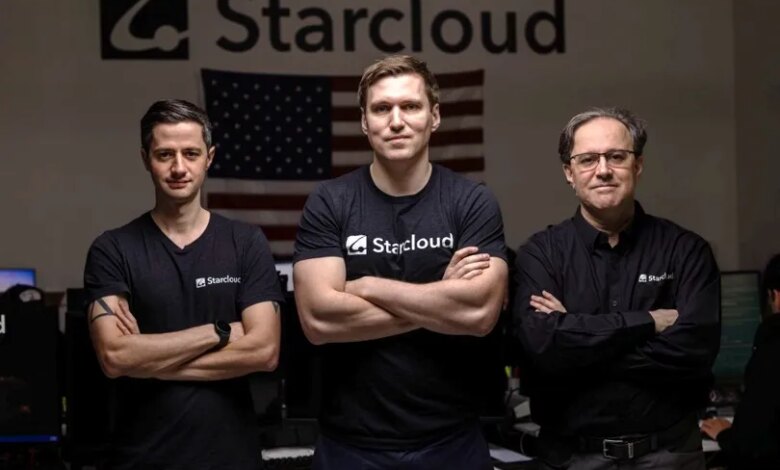
Space-based infrastructure startup Starcloud has expanded its Series A financing with a $250 million extension, boosting the company’s valuation to $2.3 billion. The extra funding follows a $170 million raise completed in March and comes as the firm aggressively expands its manufacturing capacity and locks down orbital transport options for its high-performance compute satellites.
Expanding Production and Strategic Backing
Manhattan West Ventures led the extension, which featured investments from major technology companies including Cisco and Nvidia, with Nvidia supplying $25 million of the round. A broad roster of venture capital firms also participated, including Benchmark, EQT, Soma, NFX, 776, Cedar Capital, Goanna Capital, and Standard Capital.
Starcloud, which currently employs 25 people, is using the new capital to equip a 100,000-square-foot production facility in Woodinville, Washington. Located near satellite manufacturing hubs operated by Amazon and SpaceX, the plant will support the assembly of Starcloud’s expanding satellite fleet. The company has already filed requests with the Federal Communications Commission (FCC) for permission to eventually operate up to 88,000 satellites in orbit.
Securing Launch Space in a Constrained Market
A core priority for Chief Executive Officer Philip Johnston is locking in launch slots before commercial rocket availability tightens. SpaceX is planning to phase out its dependable Falcon 9 rocket by 2028 in favor of its massive Starship vehicle, forcing satellite operators to secure payload capacity well in advance.

Alternative heavy-lift options remain limited as competing vehicles—such as Blue Origin’s New Glenn and United Launch Alliance’s Vulcan—are not yet flying on routine schedules, and Rocket Lab’s Neutron rocket remains under development. Meanwhile, SpaceX CEO Elon Musk recently noted that an attempt to catch a returning Starship booster will be pushed back by a few months, with plans to re-fly a Starship upper stage targeted for late this year or early 2027.
To maintain its momentum, Starcloud plans to deploy two of its second-generation “Starcloud-2” compute satellites on rideshare missions in 2027. Capable of drawing 8 kilowatts of power, these spacecraft will conduct artificial intelligence inference tasks for U.S. government agencies and commercial clients. Starcloud is also weighing the purchase of dedicated Falcon 9 launches and evaluating contracts with other launch providers.
Looking further ahead, Starcloud’s flagship orbital data center satellite, the Starcloud-3, is being designed specifically to fly aboard Starship. The company is relying on Starship’s payload capacity to significantly lower the cost of placing heavy computing hardware into orbit, creating an inference layer that can compete on cost with ground-based facilities.
Designing Hardware for Space-Based AI
Starcloud’s technical roadmap rests heavily on its partnership with Nvidia. The startup’s first test satellite, Starcloud-1, made history by operating a standard terrestrial Nvidia H100 GPU in space and utilizing it to train an AI model in orbit. Insights from that operational test are now feeding directly into Nvidia’s development of the Vera Rubin Space-1, its first dedicated graphics processor engineered specifically for space environments.
Starcloud aims to launch the Vera Rubin Space-1 processor into orbit by late 2028. Its engineering teams are currently focusing on three key technical hurdles:
- Balancing higher operating temperatures with the size and weight of thermal radiators needed to shed heat in a vacuum.
- Protecting sensitive silicon components from radiation in low Earth orbit.
- Ruggedizing hardware components so they can survive the intense mechanical stress and vibration of launch.
If successful, Starcloud believes its orbital infrastructure could offer a viable alternative to land-based data centers, delivering scalable AI processing power directly from space.